The Hallway Nobody Talks About
The One When You Don’t Recognize Yourself Anymore
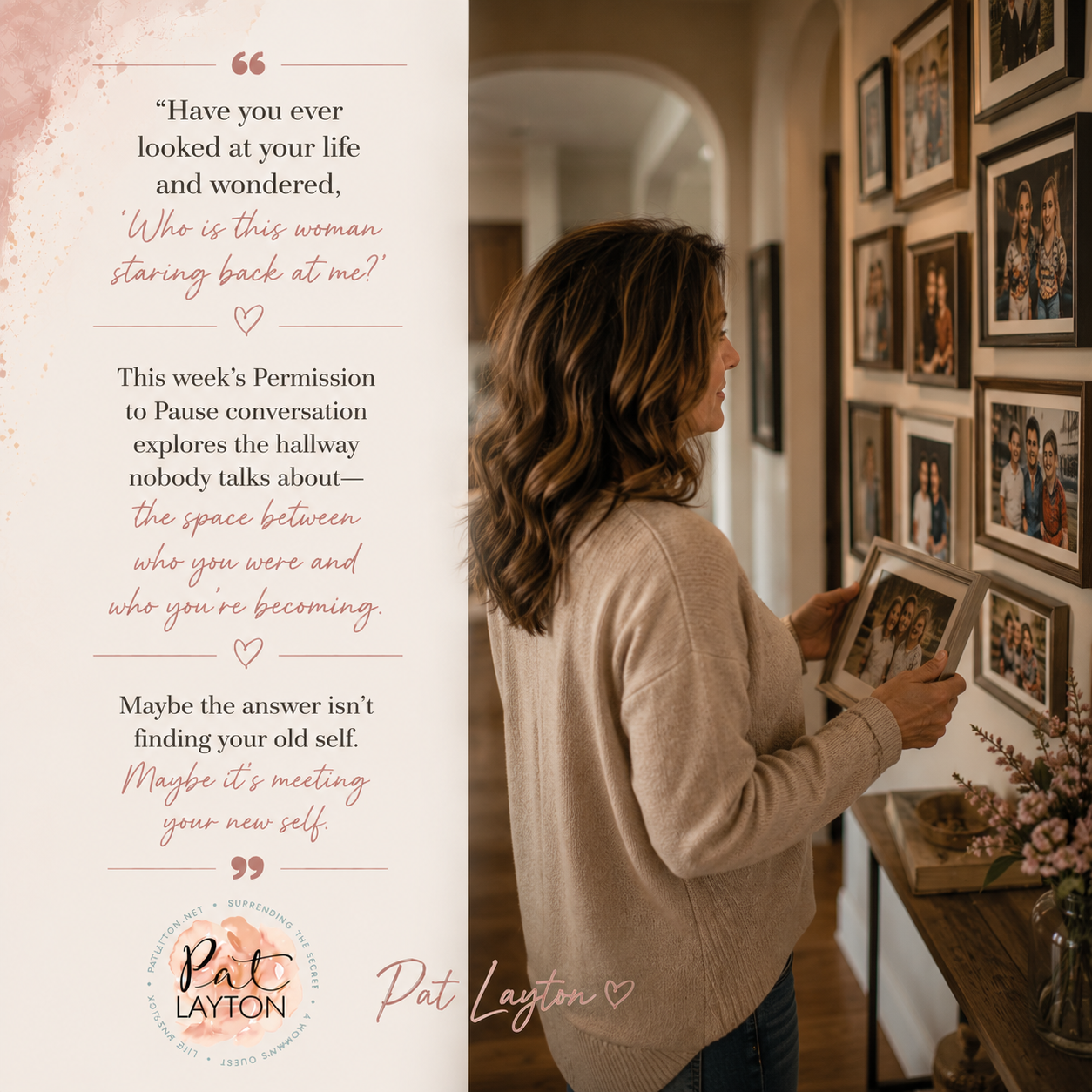
Friend, can I ask you something?
When was the last time you looked at your life — not your face, but your life — and thought… Who is this person?
When did I become her?
And how do I find my way back?
A few days ago, I received an email that I haven’t been able to put down.
A woman — brave, exhausted, and heartbreakingly honest — told me she was struggling emotionally more than she ever had before. She was overwhelmed by aging. Wounded by painful relationships with her adult children.
And then she wrote something I read more than once:
“It seems like the people around me have already decided who I am — and that I’m too broken to be fixed.”
I think many women carry that same quiet fear. I know that I sometimes do.
Not necessarily that they’re broken, but that the final verdict on their life has already been written. That other people’s version of their story is the one that will stick.
Underneath all her circumstances, I kept hearing one question echo through every sentence she wrote:
If the roles that once defined me have all changed… who am I now?
That, friend, is the hallway nobody talks about. Not a hallway between jobs or cities — but between identities. A place where the old definitions don’t fit anymore, and the new ones haven’t quite arrived yet.
The Grief We Don’t Give Ourselves Permission to Feel
I think many women enter this season of life carrying losses they don’t even recognize as grief. Nobody died. Nothing catastrophic happened. And yet…
There is grief in realizing your children don’t need you the way they once did.
There is grief in discovering that some of the people you sacrificed for remember the story differently than you do.
There is grief in looking at old dreams and wondering if they’ll ever unfold the way you imagined.
And because we think we shouldn’t feel these things — because we’re blessed, we have families, we have faith — we stop talking about them. But feelings don’t disappear just because they’re inconvenient. They simply go underground.
What the Bible Says About Seasons Like This
Here’s what I believe with everything in me: your identity was never meant to be built on your roles. Not being a mother, a wife, a ministry leader, a caretaker. Those are beautiful things — but they are things you do, not who you are.
Ephesians 2:10 calls you God’s masterpiece — His poiema, the Greek word we get ‘poem’ from.
You are not a function.
You are not a role.
You are not the story someone else is telling about you.
You are a work of art that is still being written by the One who created you.
Think about the women in Scripture who stood in their own hallways.
Naomi lost her husband and both sons, returned home, and said aloud: “Don’t call me Naomi — call me Mara, because the Almighty has made my life very bitter” (Ruth 1:20). She didn’t paste on a smile. She named her grief. And God didn’t abandon her in it. He was already weaving a sense of redemption through the very losses she was mourning.
And then there’s Isaiah 43:18-19, one of my anchors for seasons of transition.
God says:”Forget the former things; do not dwell on the past. See, I am doing a new thing! Now it springs up; do you not perceive it?”
Friend, what if the hallway you’re standing in right now is not a dead end?
What if it’s the threshold of something God is building that you simply cannot see from where you’re standing yet?
Some of the deepest work God has done in my own life happened during the seasons I would never have chosen. Uncertain seasons. Quiet seasons. Seasons where I couldn’t see the ending. The discomfort of not recognizing yourself isn’t a sign that you’ve lost your way. It may be a sign that God is reintroducing you to yourself — at a deeper level than ever before.
3 Things You Can Do This Week
Step 1: Name the grief without apologizing for it.
If you’re in a season of loss — even the kind where nothing catastrophic happened but something has changed — give yourself permission to call it grief. Write it down. Pray it out loud. Tell one trusted person. You don’t need a tragedy to earn sorrow. Unfulfilled dreams matter. Strained relationships matter. Stop telling yourself you shouldn’t feel what you feel, and let God meet you right where you actually are.
Step 2: Anchor your identity in one truth this week.
Pick one verse. Write it on a card and put it somewhere you’ll see it every morning. Let it be your answer when the enemy tries to tell you that you are what you’ve failed at, or what others say you are. Start with Psalm 139:14 — “I am fearfully and wonderfully made.” Not was. Not used to be. Am. Present tense. Right now, in this hallway, in this season — you are still God’s.
Step 3: Choose companionship over isolation.
The hallway gets so much darker when we try to walk it alone. Come join us in community — either A Woman’s Quest or Permission to Pause, A Quiet Quest on Skool — where women are having exactly these kinds of honest, grace-filled conversations. You don’t have to have it all figured out to show up. You just have to be willing to not be alone anymore.
You know what I believe about the woman who wrote me that email? Her story is still being written. And I believe the same about you.
The very questions keeping you awake at night are not signs that you’ve reached the end of your story.
They may be signs that a new chapter is trying to begin.
One that still contains beauty.
One that still contains purpose.
One that still contains you.
♡ Pat
🎧 IF YOU ARE Ready to go deeper!
I invite you to listen to the full episode of Permission to Pause: “The Hallway Nobody Talks About: When You Don’t Recognize Yourself Anymore”
Also find community with women just like you in my private coaching group A Woman’s Quest.
Email me for a chat about that! patlayton@mac.com